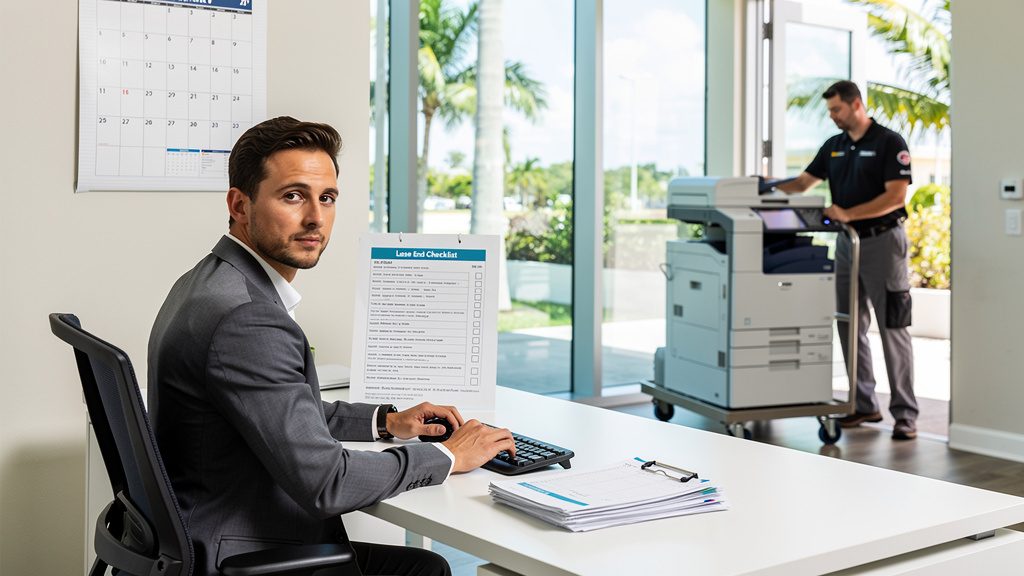
If you leased a commercial copier or printer for your South Florida office a few years back, you probably weren’t thinking much about lease-end when you signed the paperwork. Most businesses focus on the monthly payment, the speed of the machine, and whether it can keep up with daily print volume. But every copier lease has an expiration date, and what happens next matters just as much as what happened on day one. Handled well, lease-end is a simple decision point. Handled poorly, it turns into an unplanned month-to-month scramble, an equipment dispute, or a rushed upgrade decision made under pressure.
At Commercial Copier Leasing South Florida, we work with offices across Miami-Dade, Broward, and Palm Beach counties, and lease-end conversations are one of the most common calls we get. Below is what actually happens when your copier lease term ends, the choices you’ll have, and how to make sure you’re not caught off guard. For a broader look at how leasing works from the start, see our complete guide to commercial copier leasing in South Florida.
Your Four Options When a Copier Lease Term Ends
When your lease term reaches its scheduled end date, most businesses in South Florida have four realistic paths forward. Which one makes sense depends on your lease structure, how the equipment has held up, and whether your printing needs have changed since you signed.
1. Return the Equipment
This is the most straightforward option under a standard Fair Market Value (FMV) lease. You simply hand the copier or printer back to the leasing company at the end of the term, with no further payments and no ownership obligation. Return makes sense for businesses that are downsizing, relocating outside the leasing company’s service area, closing a location, or that simply want a clean break to move to different equipment or a different arrangement entirely.
2. Renew or Extend the Lease
If the machine is still performing well and your print volume hasn’t changed much, you can often renew the lease on the same equipment, sometimes at a reduced monthly rate since the equipment has already depreciated. This works well for smaller offices with light, predictable print needs where the existing machine still meets every requirement. It’s usually the least disruptive option, but it’s worth weighing against upgrading, since renewing means keeping technology that’s now several years older.
3. Upgrade to New Equipment
This is the option most businesses end up choosing, and for good reason, which we’ll get into below. Upgrading means rolling into a new lease on a current-generation copier or printer, often with better speed, more advanced finishing options, and features the old machine simply didn’t have.
4. Buy Out the Equipment
Many FMV leases include a purchase option at the end of the term, letting you buy the copier outright at its then-current fair market value. This can make sense if the machine is in excellent condition, still meets your needs, and the buyout price is low enough to justify ownership over a new lease. It’s worth noting that this buyout conversation is specific to FMV leases. If you originally signed a $1 buyout lease (sometimes called a capital lease), you already own the equipment once the final payment is made and the $1 purchase is exercised, so there’s no separate end-of-term buyout decision to make. Businesses in Miami-Dade, Broward, and Palm Beach counties considering ownership should compare the buyout quote against current lease pricing before deciding, since newer equipment sometimes costs less per month than the buyout math suggests.
What to Expect During Equipment Return
If you’re returning equipment at lease-end, whether because you’re not renewing or because you’re upgrading to a different make and model, there’s a process involved, and it’s worth understanding upfront so nothing catches you off guard.
Inspection for Wear and Tear
Leasing companies inspect returned equipment for condition. Nearly every commercial lease agreement includes language distinguishing “reasonable wear and tear” from actual damage. Reasonable wear and tear covers the normal cosmetic effects of daily office use: minor scuffs on the exterior housing, faded labels, or slight discoloration from years of operation. Damage refers to things like cracked panels, broken feed trays, liquid damage, missing parts, or heavy staining from ignored maintenance issues. If a machine comes back with damage beyond normal wear, the lessee is typically billed for repair costs or an adjusted equipment value. This is one of the most common sources of lease-end disputes, and it’s largely avoidable with routine maintenance and prompt service calls during the lease term rather than letting small issues go unaddressed.
Packing, Shipping, and Logistics
Commercial copiers are heavy, often several hundred pounds, and they’re not something you disconnect and drop off yourself. A reputable leasing provider coordinates the return logistics: scheduling a pickup, providing any needed packing materials, and handling the removal so your office isn’t left figuring out freight logistics on a multifunction printer. This should be arranged in advance of the actual pickup date, not on the day the lease expires.
Timing Matters
Equipment returns need to be scheduled, not just requested. Depending on the leasing company’s logistics and your building’s freight elevator or loading dock access, arranging a pickup can take one to several weeks. If you wait until the last week of your lease term to start this conversation, you risk a gap between when the old machine leaves and new equipment arrives, or worse, continuing to pay under an auto-renewal clause because notice wasn’t given in time.
Why Most Businesses Choose to Upgrade at Lease-End
In our experience working with offices throughout Kendall, Deerfield Beach, Royal Palm Beach, and the surrounding communities, the majority of businesses choose to upgrade rather than renew the same machine when a lease term ends. There are practical reasons for this pattern.
Most standard copier leases run three to five years, and print technology moves fast enough in that window that a machine leased five years ago is genuinely behind current equipment in several ways:
- Speed: Pages-per-minute output has improved significantly across most manufacturer lines, meaning a new machine at the same price point often prints noticeably faster.
- Energy efficiency: Newer copiers from Canon, Ricoh, Konica Minolta, Kyocera, and HP typically draw less power and have improved sleep/wake efficiency, which adds up on an office electric bill over time.
- Cloud scanning and mobile printing: Older machines often lack native integration with cloud storage platforms or mobile print-release apps, features that have become standard expectations in modern offices.
- Security features: Current-generation devices include stronger built-in data security, encrypted hard drives, and user authentication options that weren’t standard several years ago.
- Reliability: A machine nearing the end of a multi-year lease has more hours on it, which can mean more service calls and more downtime risk right as your team depends on it.
For a growing law firm, medical practice, real estate office, or construction company, the cost difference between renewing an aging machine and upgrading to current equipment is often smaller than expected, and the productivity gain from faster output and modern features tends to justify it. Rolling into a new lease at end-of-term also means you’re not stuck evaluating equipment from scratch. You already know your print volume, color needs, and finishing requirements from the outgoing lease, which makes right-sizing the new equipment straightforward.
When to Start the Lease-End Conversation
The single biggest mistake we see is businesses waiting until the final month of their lease to think about what comes next. A copier lease isn’t like a month-to-month subscription you can adjust overnight. Selecting new equipment, arranging delivery and installation, training staff, and coordinating the return or buyout of the old machine all take time.
As a general guideline, start the end-of-lease conversation at least 90 days before your term expires. For offices with more complex fleets, multiple devices, or networked print environments, 120 days is safer. This gives enough runway to:
- Review current print volume and decide whether your existing equipment tier still fits
- Compare renewal, upgrade, and buyout pricing side by side
- Schedule new equipment delivery so there’s no gap in service
- Arrange equipment return logistics without a last-minute rush
- Avoid accidentally rolling into an auto-renewal clause you didn’t intend to trigger
Businesses in Deerfield Beach and throughout Broward County dealing with seasonal volume swings, or offices in Royal Palm Beach managing multiple departments on one lease, especially benefit from starting early, since more moving pieces mean more coordination time.
A Good Leasing Provider Should Reach Out First
Here’s the part that often gets overlooked: you shouldn’t have to be the one tracking your own lease-end date on a spreadsheet and hoping you remember. A leasing provider that’s actually looking out for its clients tracks contract terms and reaches out proactively, well before the expiration date, to walk through the return, renewal, upgrade, and buyout options in plain terms.
If your current provider has never once reached out ahead of a lease deadline, that’s worth noticing. It’s a sign of how they’ll handle the rest of the relationship too. We proactively contact clients across Miami-Dade, Broward, and Palm Beach counties well ahead of their lease-end dates specifically so nobody ends up stuck month-to-month, hit with unexpected return fees, or scrambling to find a replacement machine on short notice.
Whether you’re weighing a return, a renewal, an upgrade, or a buyout, the right move depends on your equipment’s condition, your current print volume, and where your business is headed next. If your lease is approaching its end date, whether you’re an office in Kendall, a growing practice near Deerfield Beach, or a multi-department operation in Royal Palm Beach, reach out before the clock runs out. A conversation 90 days out beats a decision made in the final week, every time.